
Cult Following
Native Cultivars' Dirty Little Secret

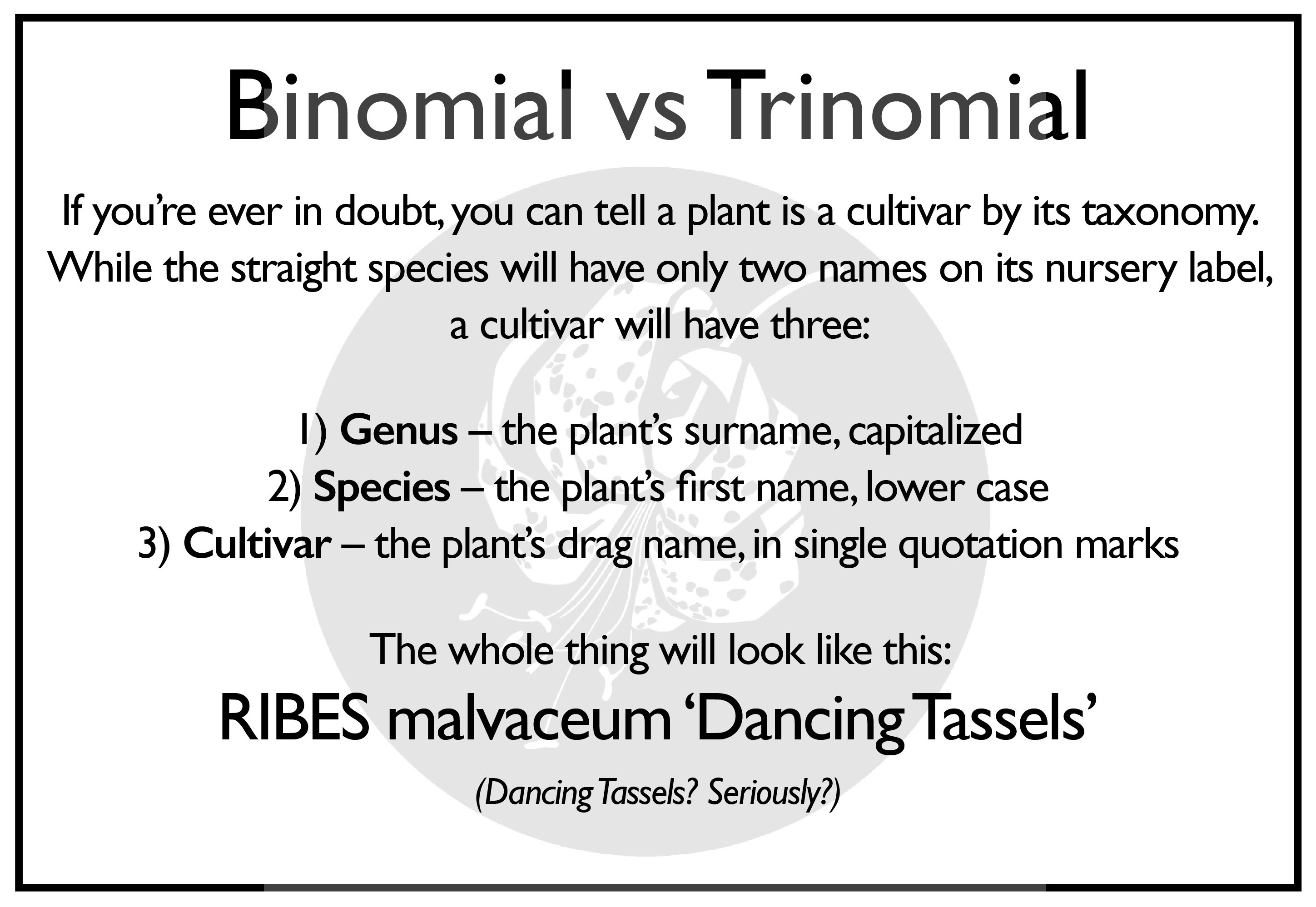
One morning, you wake up and decide you simply must plant another Ceanothus in your garden, so off you go to your local, native plant nursery. As you browse, you begin to notice just how many different varieties of Ceanothus there are on display, some with hokey nicknames like ‘Blue Jeans’ and ‘Frosty Dawn.’ (And who the hell are ‘Ray Hartman’ and ‘Joyce Coulter’?)
Understandably, you begin to wonder, “What are all these plants, exactly?” Good question. The answer is, they’re cultivars.
Welcome to the cult.
CULTIVAR 101
While some have been bred horticulturally, the majority of native plant cultivars (or “nativars”) begin as unique specimens observed in the wild that were selected for subjectively desirable and/or dependable characteristics, such as unusual growth or flowering habit. In this context, “selected” means “I saw this cool plant specimen on a hike and I took some cuttings so I could reproduce it exactly.” In other words, contrary to a common misconception, all native cultivars are not the Frankenstein-like results of hybridization in a lab somewhere. They’re often “discovered,” just as they are, like an old-school Hollywood movie star plucked from obscurity by some sharp-eyed agent at Schwab’s Drugstore. (Except in this case, the agent is a plant nerd in a Tilley hat.) But unlike the one-of-a-kind Veronica Lake, cultivars are reproduced asexually, ad infinitum. In other words, they’re clones.
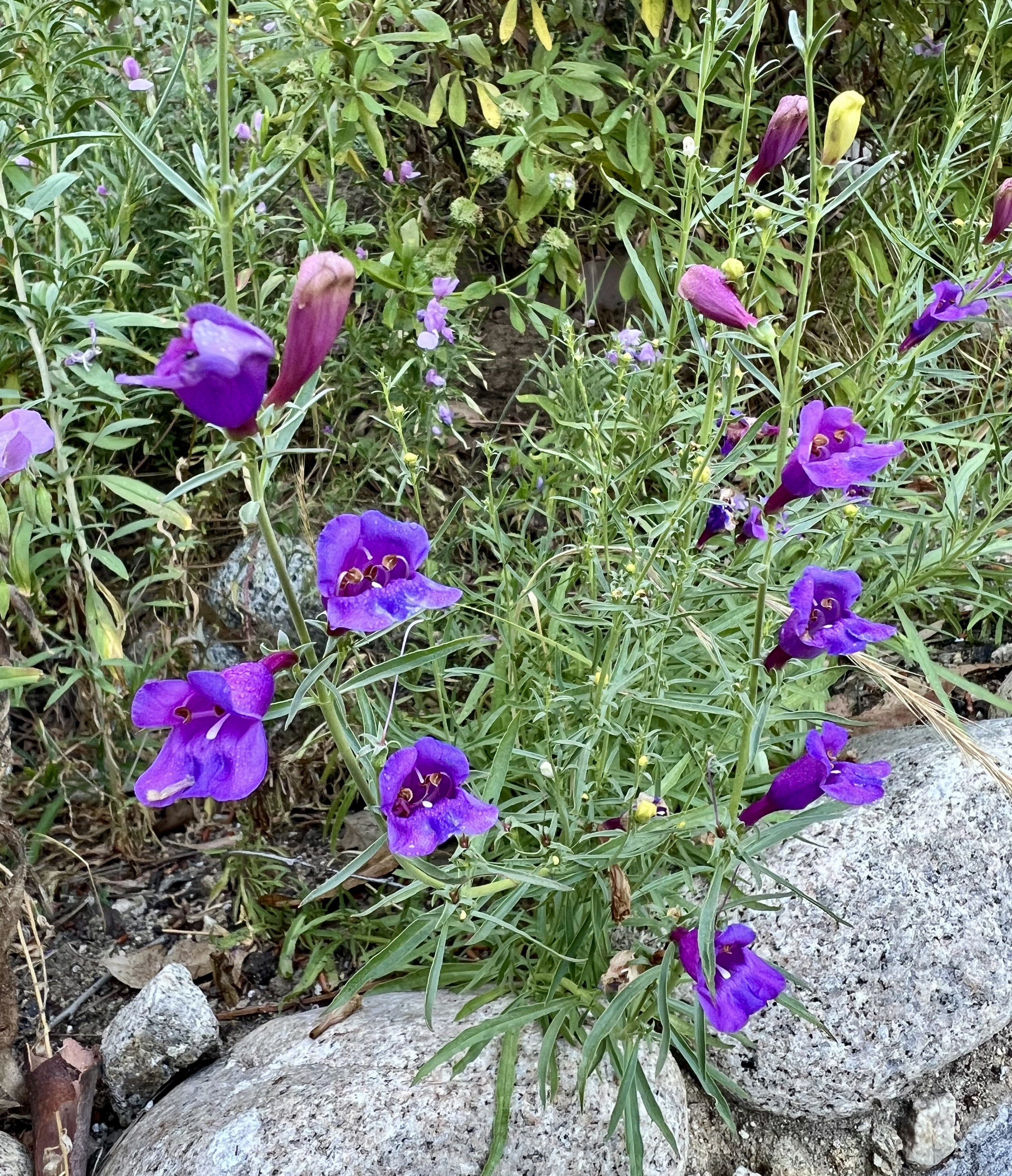
That Foothill Penstemon ‘Margarita BOP’ you put in the ground last fall, for instance, is a cultivar. It’s a product of asexual or vegetative propagation, meaning it started life as a cutting. As a result, it has the exact genetic profile of every other ‘Margarita BOP’ in the world, down to its last strand of DNA. ‘Margarita BOP’ is justly popular for its uniquely floriferous habit and the tolerance it demonstrates for “typical garden conditions” – characteristics it may not necessarily share with non-cultivar specimens of Penstemon heterophyllus (or the “straight species,” as non-cultivars are known). But the seeds of your ‘Margarita BOP,’ should they germinate, will not necessarily grow up to be a Penstemon with the same characteristics as the mother plant that produced them. That’s because when plants grow from open-pollinated seed (i.e., sexual reproduction), some variation necessarily takes place through natural mutation and genetic recombination. So, if you want those same, subjectively desirable ‘Margarita BOP’ traits every time, the plant must be propagated asexually. The end result is a seemingly endless stream of exact, horticultural carbon copies.
LOOKS AREN’T EVERYTHING
Given the growing number and popularity of native cultivars, a conscientious gardener might be forgiven for asking:
How does the use of plants reproduced through the cloning of a single specimen, at scale, impact biodiversity in one’s own garden?
Globally speaking, what are the broader environmental implications of the industrial cloning of a handful of individual plants?
As is often the case, the answers to complex questions like these aren’t necessarily straightforward, but in my opinion, there’s nothing essentially “bad,” about any one cultivar, and generally speaking, the use of cultivars has its place within the constellation of native plant gardening practices. But it’s important to note that most native cultivars are selected by the horticultural trade for their aesthetics, not their biology. So if promoting biodiversity and supporting local pollinators is your primary objective as a native gardener, opting for a cultivar over the species may not be the best choice.
“Biodiversity” is a word you hear tossed around a lot these days, but what does it actually mean? Well, imagine that the 6,500 or so plant species native to the California Floristic Province have been reduced to a few hundred, and further imagine that those remaining species are all genetically identical to one another within their respective genus (a plant’s “surname”). That’s the opposite of biodiversity. An over-reliance on cultivars results in our native gardens becoming less genetically distinct from one another. Less genetic distinction can result in lowered species resilience. If a new pathogen or predator shows up, for instance, lowered resilience can lead to the potential collapse of ecosystems. And while nobody is even remotely suggesting that you could trigger a mass extinction event by planting ‘Margarita BOP’ in your garden instead of a genetically unique straight species of Foothill Penstemon, there’s no question as to which one favors biodiversity.
JUST ASK THE POLLINATORS
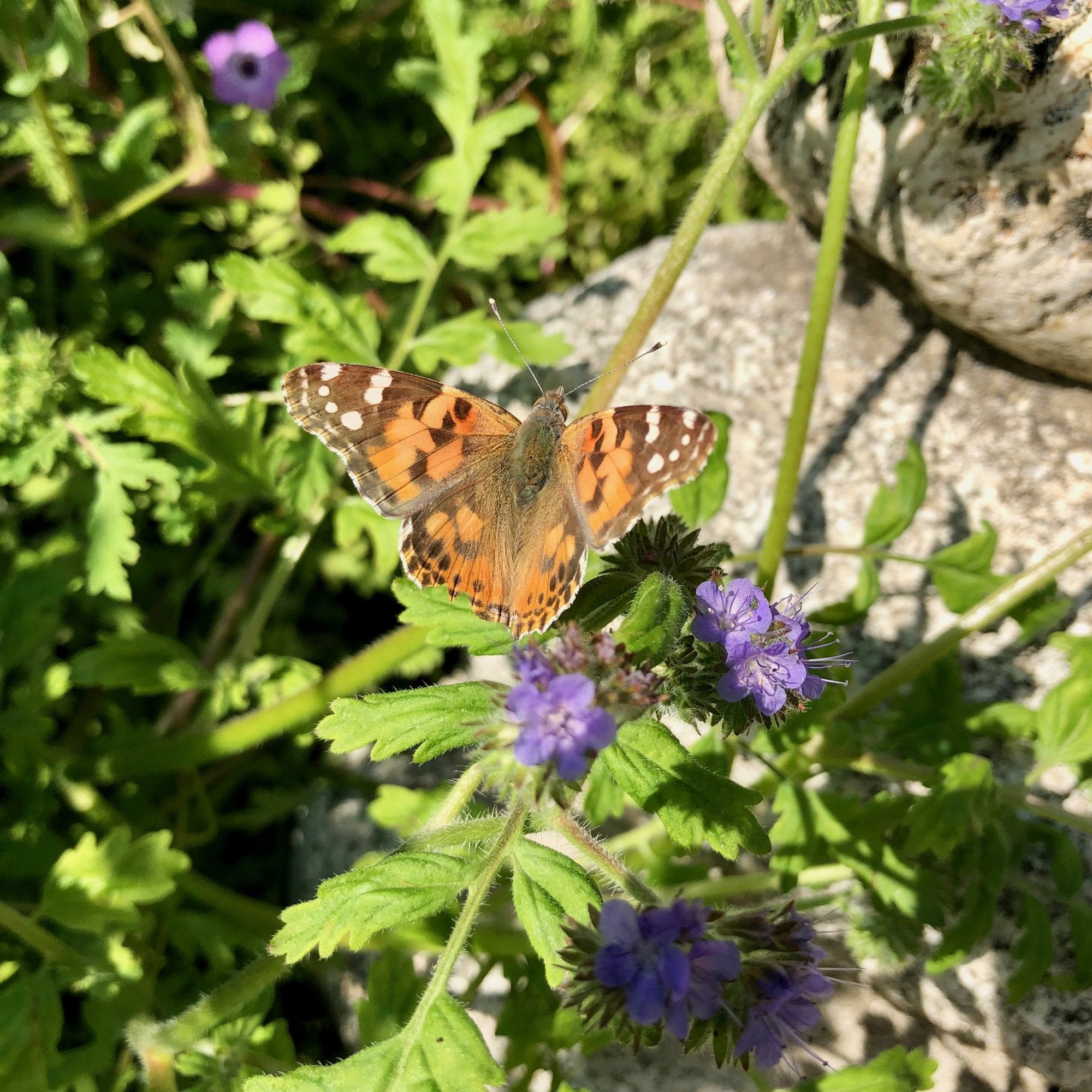
After biodiversity, one of the most compelling arguments to be made for limiting the use of cultivars is the mounting evidence that pollinators most often prefer the straight species over a cultivar in the same genus. A lot of this has to do with a given plant’s level of “floral reward” – the amount of nectar and pollen available at various times of the day – and with the sensitivities of pollinating insects to that plant’s particular appearance and rhythms – in other words, to the intricate relationships governing the interactions between plants and pollinators. (It should be noted that there are a number of cultivars that appear to be “harmless, and just as appealing to pollinators as the straight species, so while the general principle may be widely applicable, the attractiveness of each cultivar to its pollinators should ideally be evaluated on a case-by-case basis. For a more detailed discussion of these complexities, see the Xerces Society’s “Picking Plants for Pollinators: The Cultivar Conundrum”:
“Many cultivars are sterile and have no benefit to pollinators. Others have flower structures so complex a pollinator couldn’t find its way to the center with a map, a compass, and a native guide.
More troubling, cultivars often have reduced nutritional benefits, and haven’t been well-enough studied to identify those which may be harming pollinators in that regard.
On the other end of the spectrum… the purple coneflower cultivar ‘magnus’—one of the most popular cultivars you’re likely to come across in the nursery trade—was bred from a variety that was more compact and flowered more heavily, but is otherwise little changed from the straight species.
SAME OLD SAME OLD
If you’re looking for yet one more reason to choose the species over a cultivar, consider how the unsurprising homogeneity of cultivars can be a bit of a bore. When you plant a cultivar of California Aster (Corethrogyne filaginifolia) like ‘Moss Landing’ or ‘Silver Carpet,’ you know exactly what you’ll be getting. When you plant the species of California Aster, on the other hand, you may have an idea of the plant’s general characteristics, but you never really know how this particular specimen will differ from all other California Asters, even within the relatively narrow precincts of your own garden. It’s also uniquely your California Aster, as distinctly, genetically individual as you are.
ESCAPE THE CULT
While cultivars may have a role to play, here in the LANPS garden, we try to plant the species whenever possible. On those relatively rare occasions when we do plant a cultivar, it has to satisfy at least one of the following criteria:
There is a very specific reason for needing to know, in advance, how the plant will perform in a specific spot in the landscape
The species just isn’t available and we don’t have the patience to either propagate it from seed or wait until a local native plant nursery decides to carry it someday
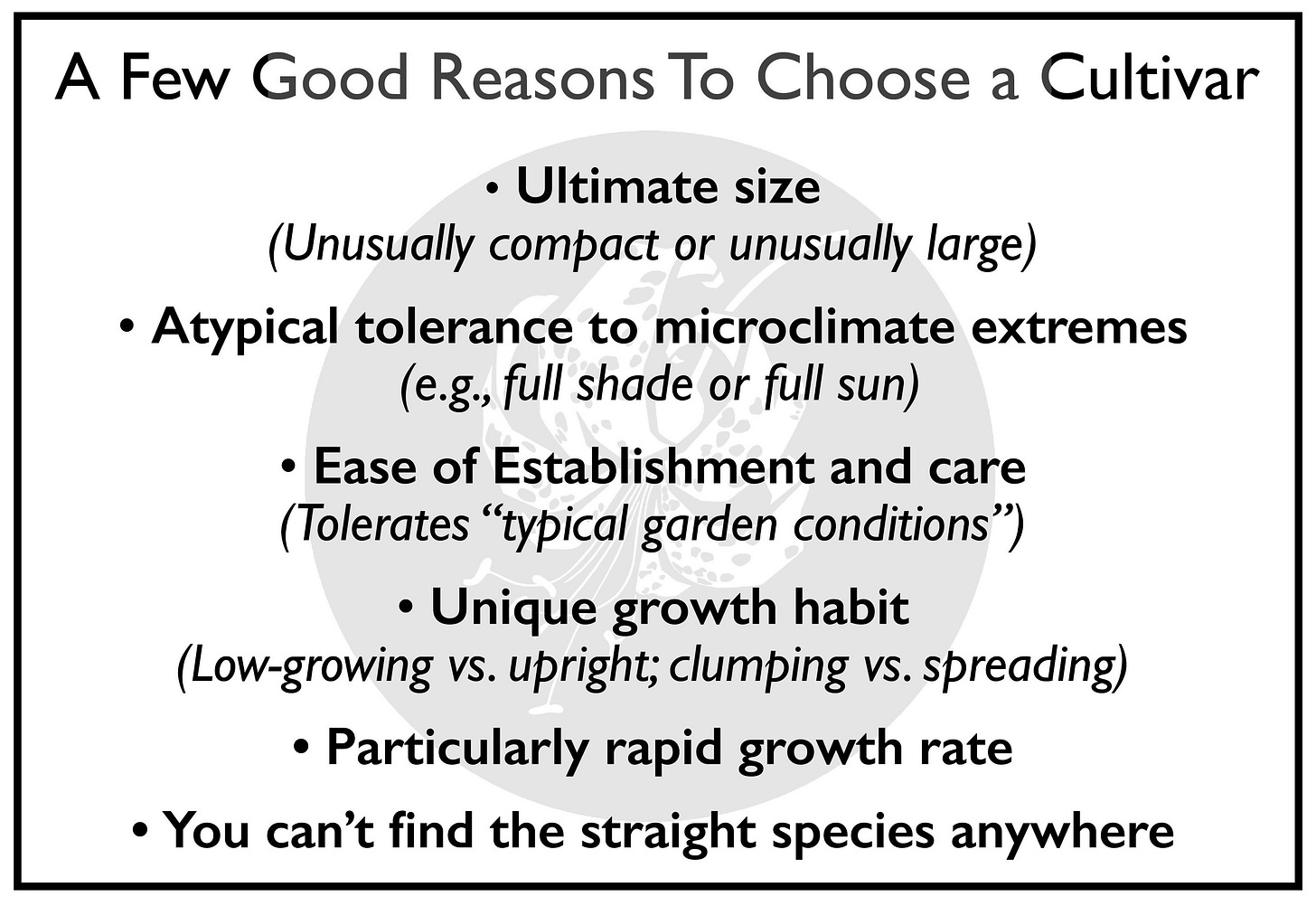
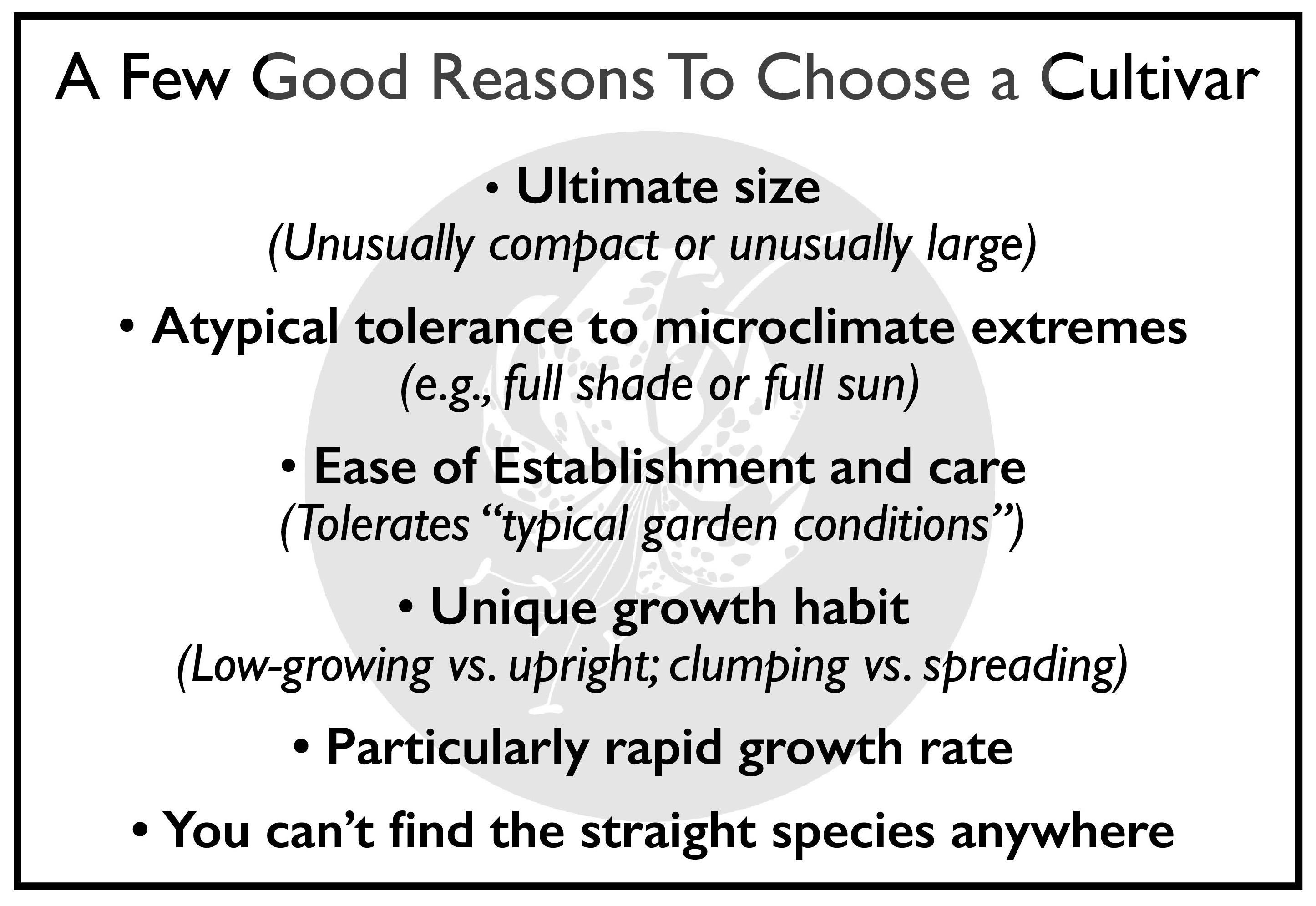
Take, for example, one of L.A.’s local native grasses, Giant Wildrye (Elymus condensatus). The straight species tends to be a little too rangy, even for the largest of gardens, popping up a football field away from where it was originally planted via a network of highly aggressive rhizomes. The Giant Wildrye cultivar, ‘Canyon Prince,’ discovered on one of the Channel Islands, was selected for its unusually clumping (rather than spreading) growth habit, allowing even smaller gardens to include a representative of this beautiful and important genus.
Ironically, if and when you’ve decided to rely less on cultivars in your garden (or, at least, to be more discriminating when it comes to their use), a new challenge awaits you: it can actually be quite difficult, if not impossible, to find the damn species for sale, even at nurseries that specialize in California native plants. A glance at their inventory will usually tell you that a substantial percentage, if not the majority of certain plants within a given genus on the list, are cultivars. Take Frangula californica or Coffeeberry, as just one example. Most of the inventory is likely going to be made up of cultivars with drag names like “All About” ‘Eve Case,’ the vaguely suggestive ‘Mound St. Bruno’ or the outright BDSM ‘Leatherleaf,’ all of which are asexually reproduced clones. Sometimes the straight species itself isn’t even offered. The good news is, you’re more likely to find the straight species for sale these days than you would have just a few years ago.
So, before you fall for the studly charms of ‘John Dourley’ (Manzanita), ‘Allen Chickering’ (Sage), or ‘Bruce Dickinson’ (Buckwheat), consider enhancing the biodiversity of your own garden and giving your resident pollinators a boost by planting the straight species when you can: a non-cultivar, grown from open-pollinated seed.
My plant drag name is Shasta Buckwheat.
Great article, thanks. I learned a lot. 👍