
Hand Job
How (and Why) to Water Your Native Garden by Hand
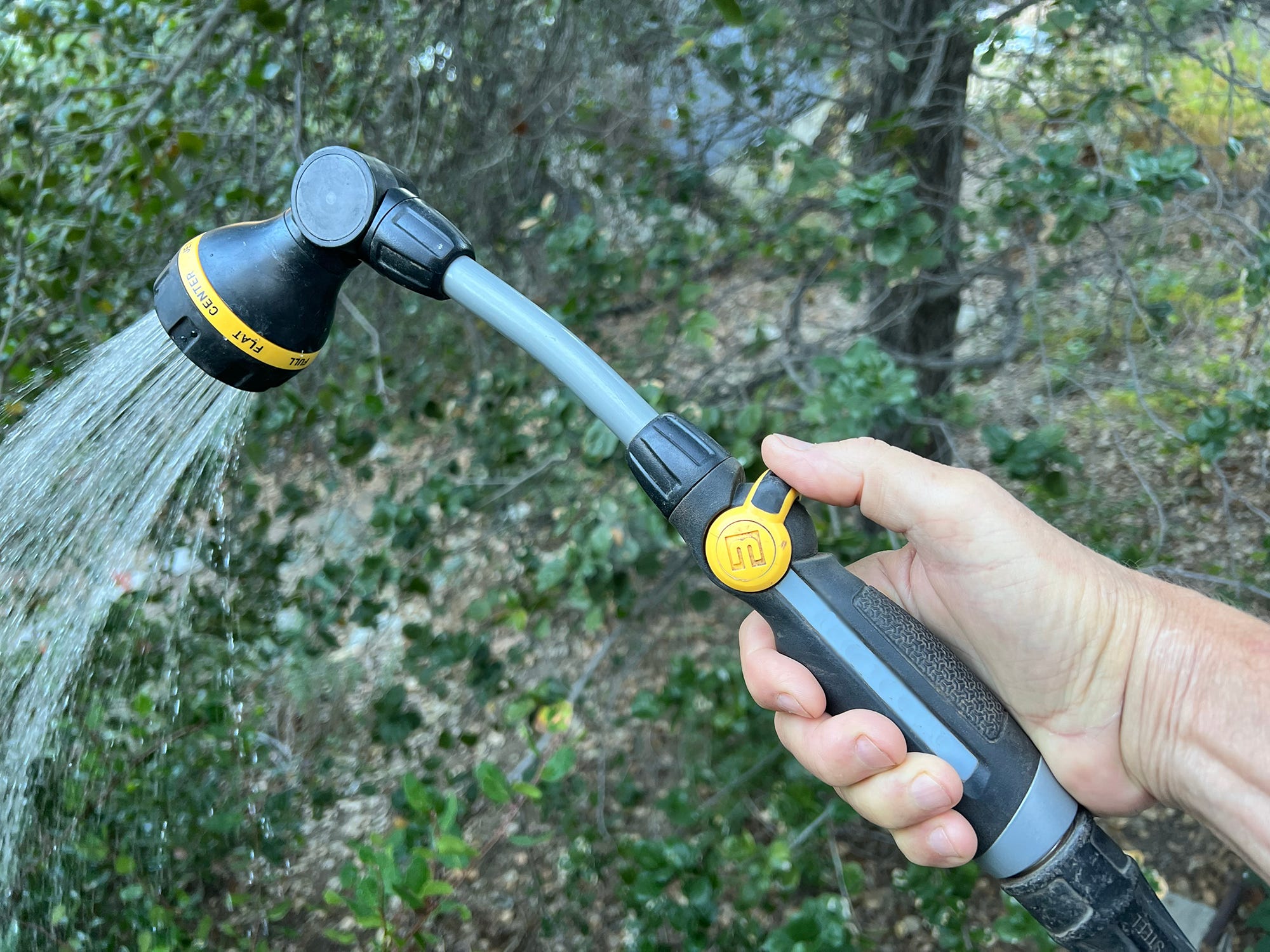
Unlike a wild landscape, a garden obviously depends upon various human interventions in order to thrive, supplemental watering being chief among them. No matter how “drought tolerant” your California native garden happens to be, chances are it will need some extra water, at least in the case of new plantings or whenever California’s increasingly unreliable “rainy season” fails to materialize. Choosing exactly how you’re going to get this additional moisture to your plants when needed may be one of the most consequential decisions you’ll ever make as a native gardener.
Aside from a couple of “riparian zones” consisting of plants adapted to constant moisture, there are no built-in irrigation systems in the 25,000 square-foot LA Native Plant Source garden. Aside from rainfall, the only water the plants get here is delivered by hand, courtesy of Yours Truly and a hose. Depending on the circumstances, that can mean a lot of hand watering.
So, you may be wondering: why do I go through all the trouble of watering my garden manually when I could just as easily install an irrigation system, automate the whole shebang and save myself a lot of time, energy and trouble?
I thought you’d never ask.
It’s Water-Saving
Irrigating by hand conserves water by virtue of the fact that you’re the one making the watering decisions in real time, not some mindless micro-sprinkler on a mechanical timer. As a hand-watering gardener, you determine precisely when supplemental water is needed, exactly how much of it is dispensed and where. You can also monitor the moisture content of the soil as you water, stopping the flow at just the right moment so that not a drop goes where it isn’t needed.
It’s Bespoke
Hand watering also gives you the ability to customize your garden’s irrigation schedule on a granular, plant-by-plant basis. No one genus is quite like another, even within the same plant community, and watering by hand gives you the ability to tailor any applied irrigation to each plant’s distinct moisture needs. For instance, a chaparral species like Black Sage (Salvia mellifera) will likely appreciate a little extra water now and then during the summer. The extremely hydrophobic Wooly Bluecurls (Trichostema lanatum) planted right next to it? Not so much. (Even a single watering during summer dormancy can kill a Wooly Blue, almost overnight.) Sprayers are too broad for a situation like this and drippers are for swamps. That leaves targeted hand watering as the best possible solution.
You can also fine-tune a given plant’s moisture allowance based on its age. A dynamic, ever-evolving creation like a garden will always include a mix of established and newer plantings. A recently planted Ceanothus, for example, is going to have a very different set of watering needs than its surrounding elders in the same genus.
It’s Intimate
Beyond generic species characteristics, watering by hand offers an opportunity to really get to know the actual, individual specimen you’ve planted, with all its distinct, genetic quirks, including just how much extra water it might need (or not need) in order to thrive. In other words, the interactive nature of hand watering moves the human/plant relationship in your garden from the impersonal to the personal.
It’s Sensible
If one of your ultimate objectives in gardening with California native plants is to conserve water by establishing a garden that can mostly get by on rainfall alone, why go through all the trouble and expense of putting in an elaborate irrigation system that your plants won’t really need after the first year or two?
It’s the Perfect Excuse
Having to actually go outside and spend time in the garden might be the most valuable thing that hand watering has to offer a world-weary gardener. Soil; plants; wind; light; insects; birds: there’s a lot to see when you slow down enough to take it all in, and by standing in the midst of it all with a hose in your hand, you really get to enjoy the show.
So now that you’re totally convinced that hand watering is worth both the time and effort, here are a few tips to make the task as efficient and enjoyable as possible.
A Hose is a Hose is a Hose
Perhaps the biggest downside to hand watering is the potential for serious collateral damage to your plants as you attempt to drag a heavy, clunky and generally unmanageable vinyl hose around your garden. As we all know, traditional vinyl hoses also tend to kink repeatedly, cutting off the flow of water and causing an endless series of increasingly infuriating interruptions. (That also goes for “Professional Grade Kink-Resistant” hoses, which are the same as ordinary vinyl hoses, only more expensive.) Made of PVC, vinyl hoses are also difficult to recycle and can’t be placed in curbside bins when they’re kaput.
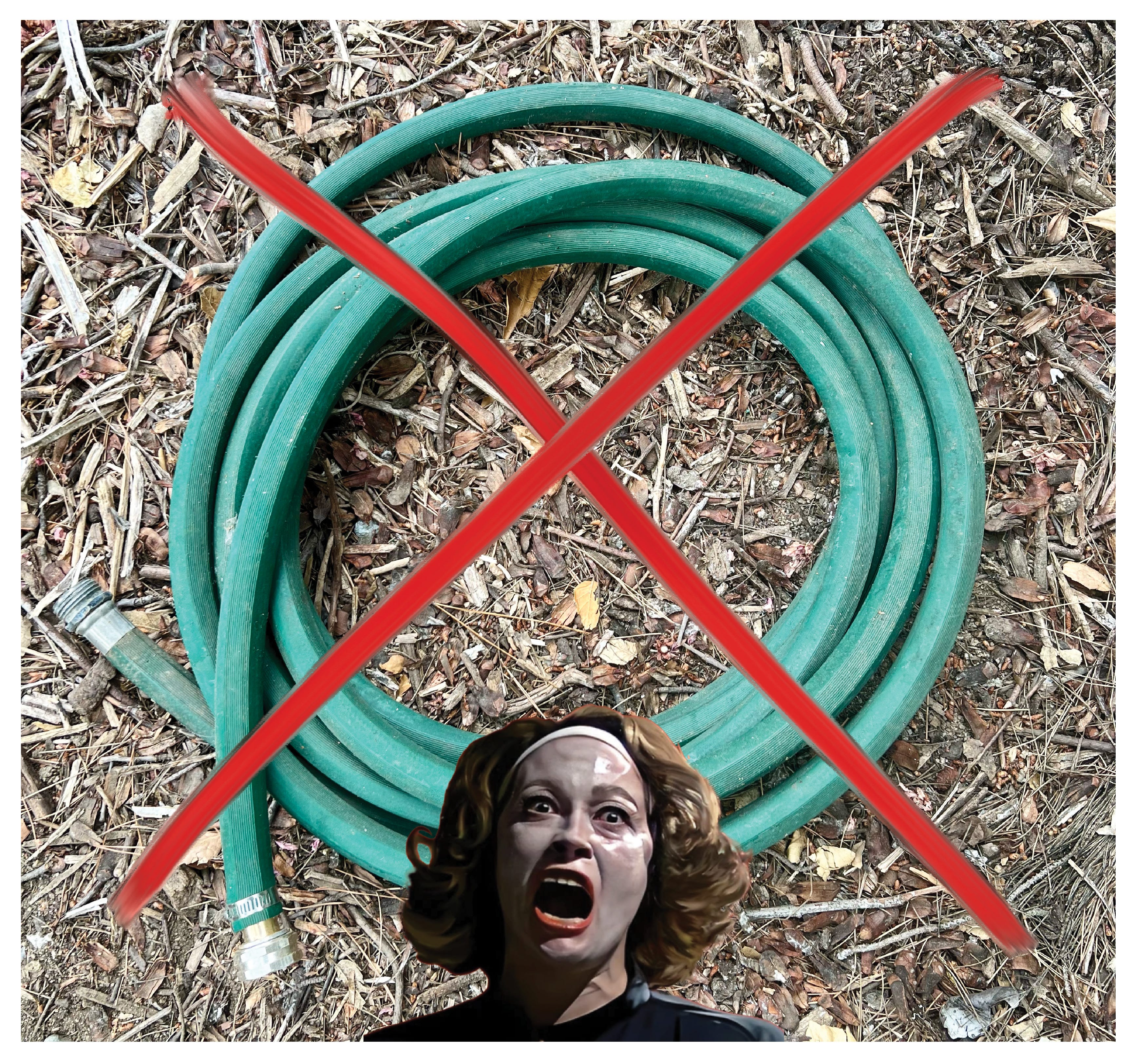
Luckily, there’s a simple solution: swap out your crap vinyl hose for one made of cloth or steel. (Many thanks to the great Sophie Pennes of Solis Gardens who introduced me to these truly life-changing alternatives.)
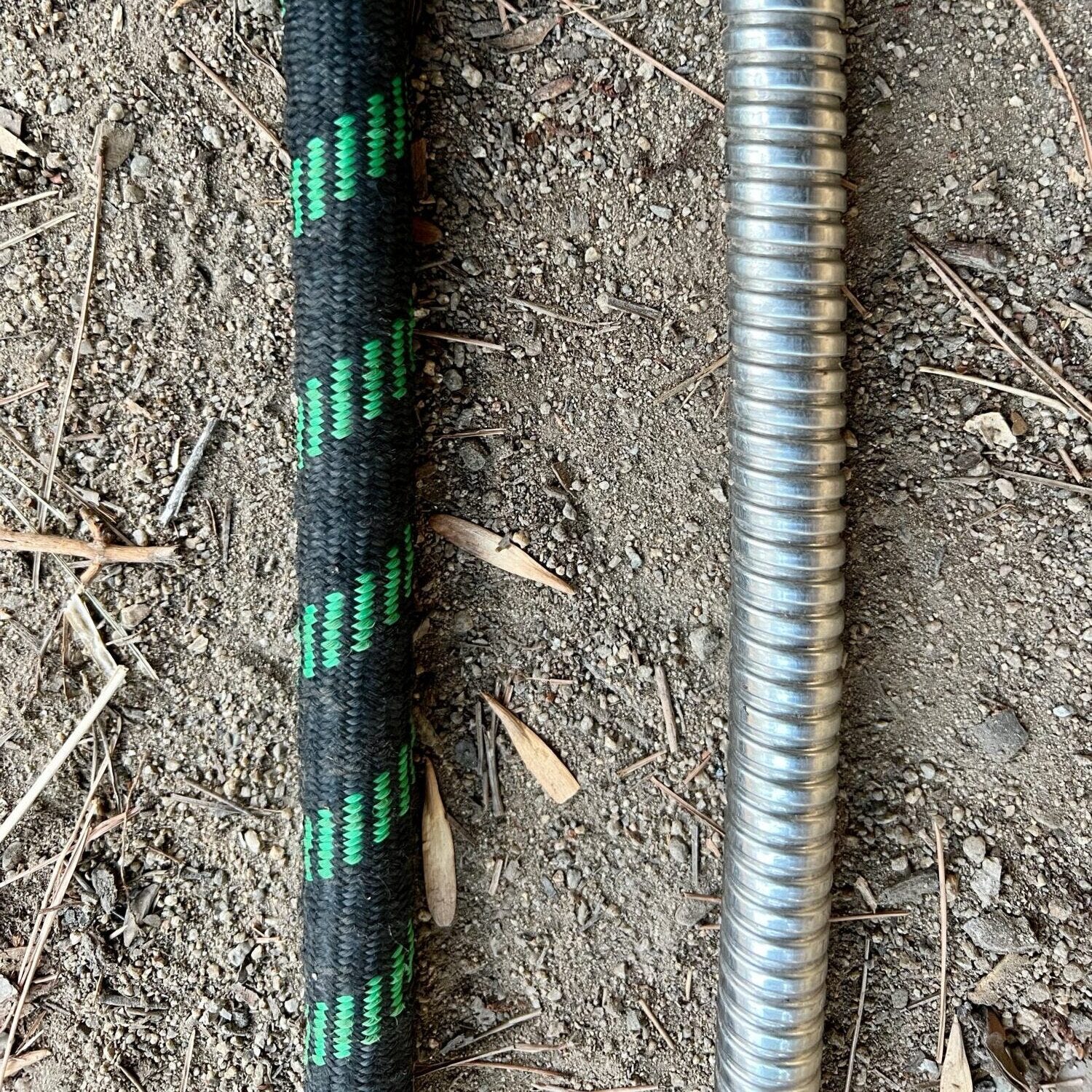
Cloth hoses expand when you turn on the spigot, uncoiling like a snake. When you turn the water off, they quickly shrink back to their original size for extremely compact storage. Incredibly light-weight, cloth hoses are the least likely to harm your plants as you move around your garden and, best of all, they will never, ever kink.
On the minus side of the ledger, cloth hoses are notoriously prone to puncturing and it usually isn’t long before they encounter a sharp object – even a single thorn –and spring a leak. Unfortunately, they’re basically impossible to repair and non-recyclable. (Personally, these two regrettable facts led me to conclude that cloth hoses’ many virtues do not outweigh their wastefulness.)
Steel hoses are not quite as lightweight as cloth, but they’re lighter than vinyl and much easier to wrangle. They also never kink. Longer lasting than cloth, a steel hose’s armadillo-like sheathing is virtually puncture-proof. They are, however, susceptible to denting if handled too roughly, which can permanently constrict the flow of water in the hose. Once that happens, they can’t be repaired, but at least metal recycling centers will take your defunct steel hose when it finally comes to the end of its usefulness.
Wands Have More Fun
After the hose, the next most consequential piece of equipment in any hand-watering operation is the nozzle. A stream of water from a typical hose nozzle, especially when delivered from a distance, will end up compacting the soil and making a muddy mess. If you have to constantly tramp through your planting beds with your clunky, human feet in order to get the nozzle closer to the plants you’re watering, you’ll also end up compacting the surrounding soil, disturbing habitat and potentially snapping off delicate branches while you’re at it. Ideally, your nozzle should allow you to a) minimize foot traffic around your plants and b) mimic the soft fall of a gentle rain. The best way I’ve found to achieve both of these objectives is to use a watering wand.
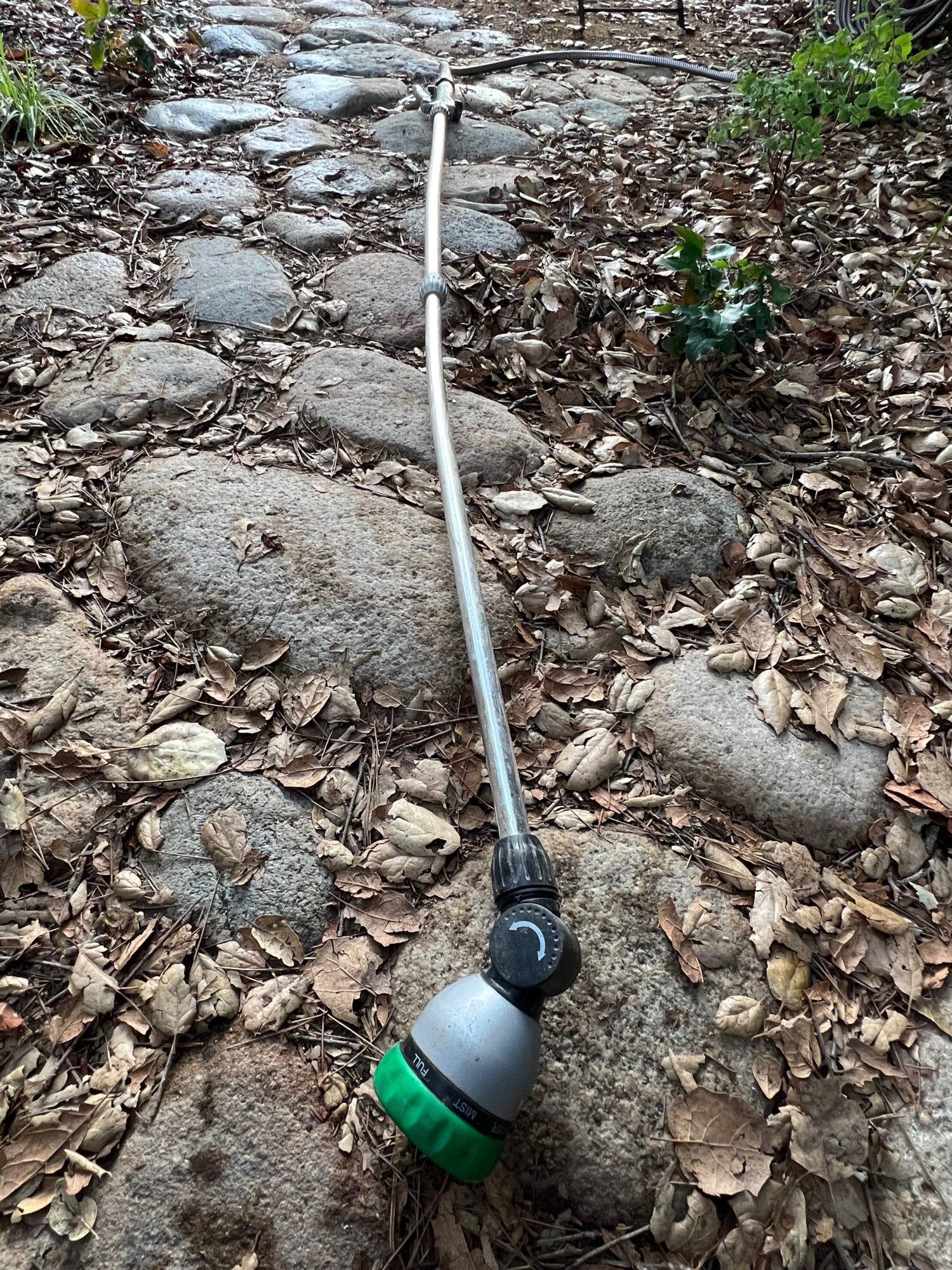
Pick the longest wand you can find, preferably telescoping, so that you can adjust its length to gently deliver the water with the nozzle positioned right over the plants’ watering basin, even while you’re standing several feet away. A wand that allows you to change the flow-pattern, including the all-important “Shower” setting, will also help to limit any collateral disturbance to the soil.
An Open and Shut Case
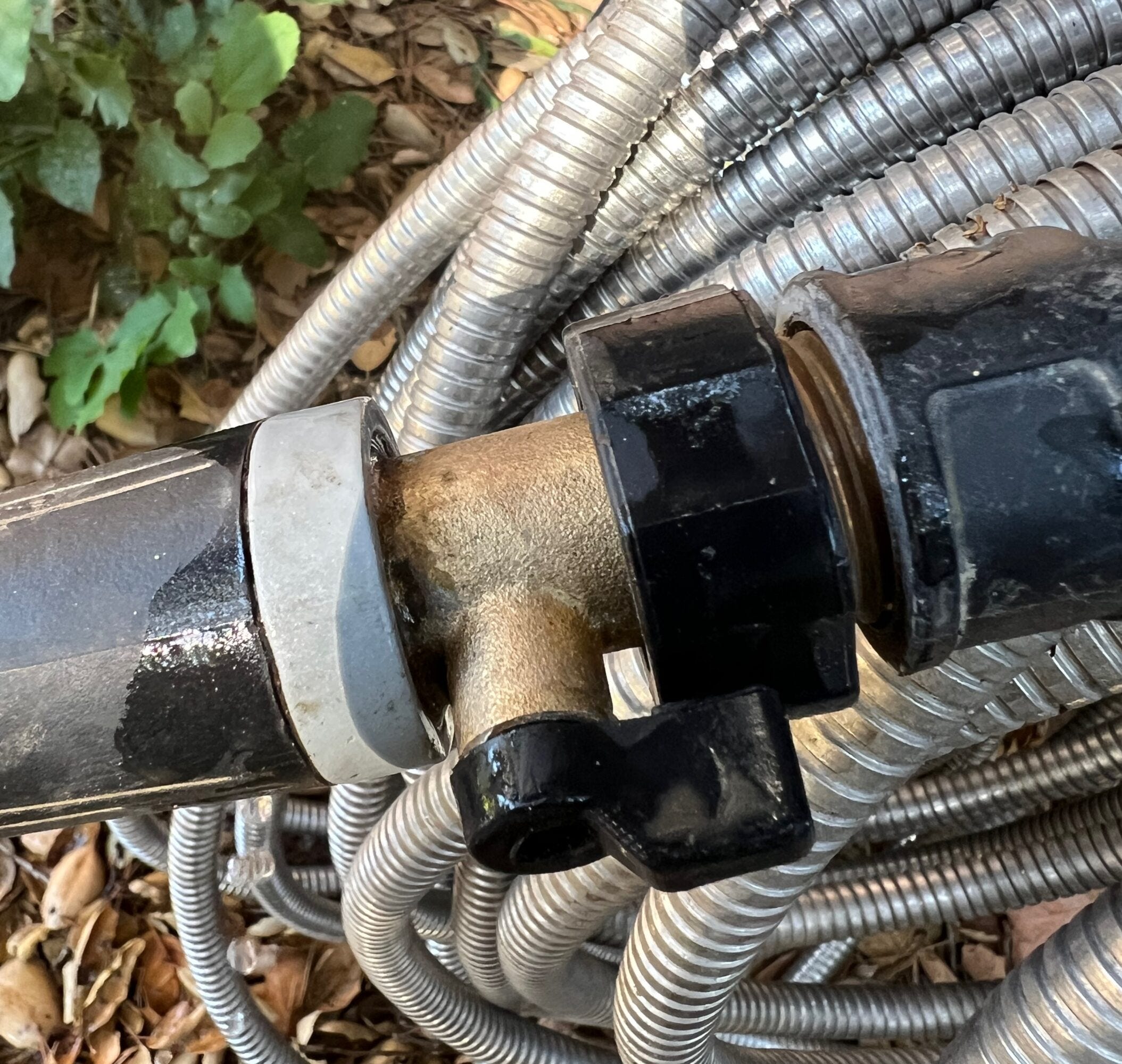
On those occasions when you want to use an oscillating sprinkler to thoroughly soak a broad area – like a big patch of Hummingbird Sage or a sprawling wildflower meadow during a rainless fall – adding a shut-off valve to the end of your hose gives you the ability to turn the water on and off wherever you happen to be standing, eliminating multiple back-and-forth trips to the hose bib as you fine-tune the position and range of the sprinkler.
The Heart of the Meter
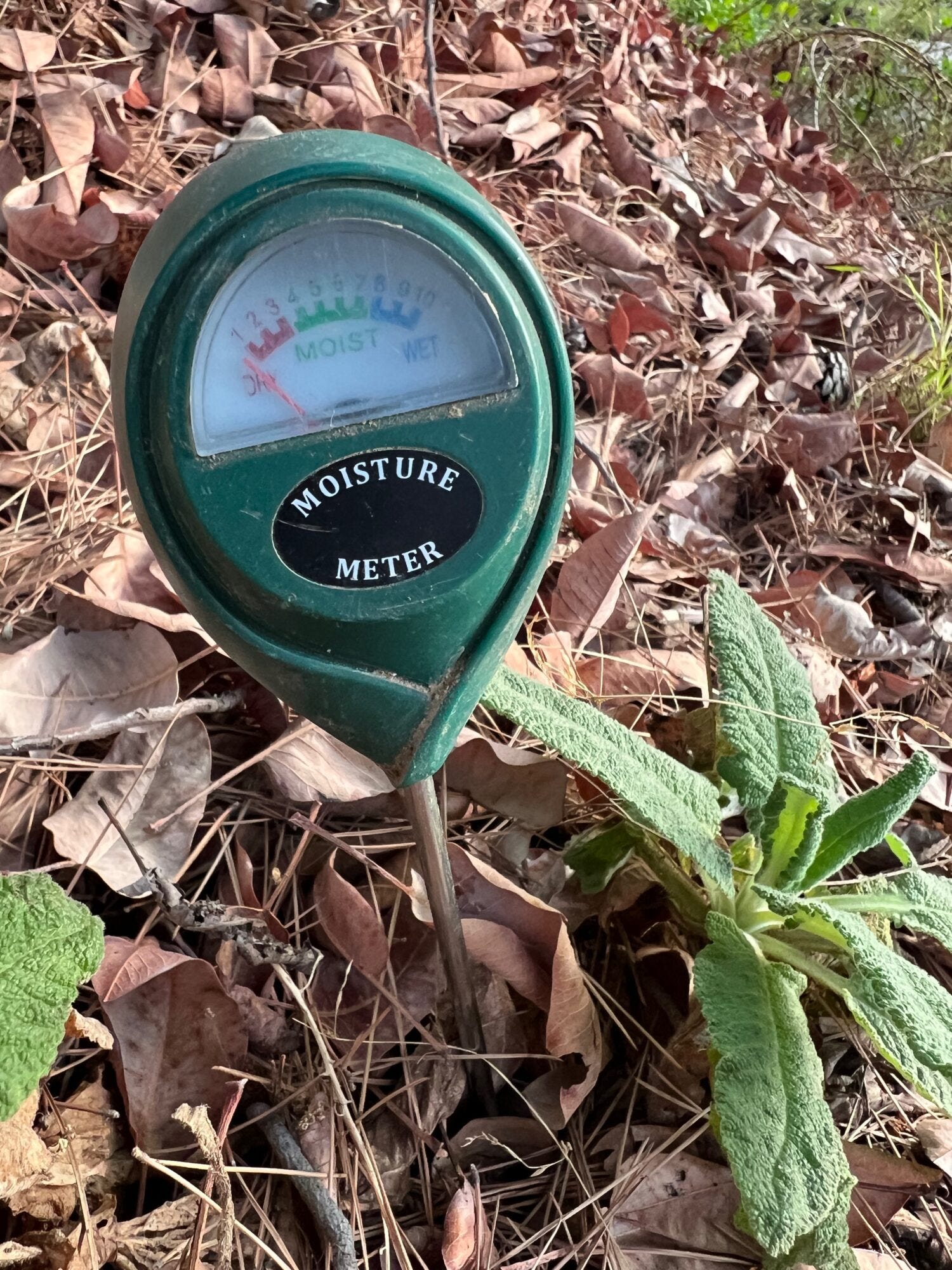
No matter how you water your native plants, it’s usually best to water them deeply. In this case “deeply” means the moisture should penetrate the soil to a depth of around 14-16 inches. This encourages deep rooting where the soil temperature is reliably cooler, helping plants to survive the hot summer months without any supplemental water (eventually). Because you’re hand watering (i.e., just standing there), you can make yourself useful by monitoring the situation below ground with a simple moisture meter. While the probes of the most readily available meters are 12” long or less, there are longer, more expensive versions out there. I mostly make do with a shorter meter. Once I get a “moist” reading at around 12” deep, I figure the water will percolate down to roughly 16” if I fill the watering basin one more time. (For a more detailed discussion of moisture meters, see the “Size Matters” sidebar in “Wooly Blue Curse.”)
At the other end of the watering spectrum, a hose nozzle is also the best way to deliver a light “refreshing sprinkle” to your plants at the end of a hot summer day as recommended by Tree of Life’s Mike Evans.
My Heart Belongs to Caddy
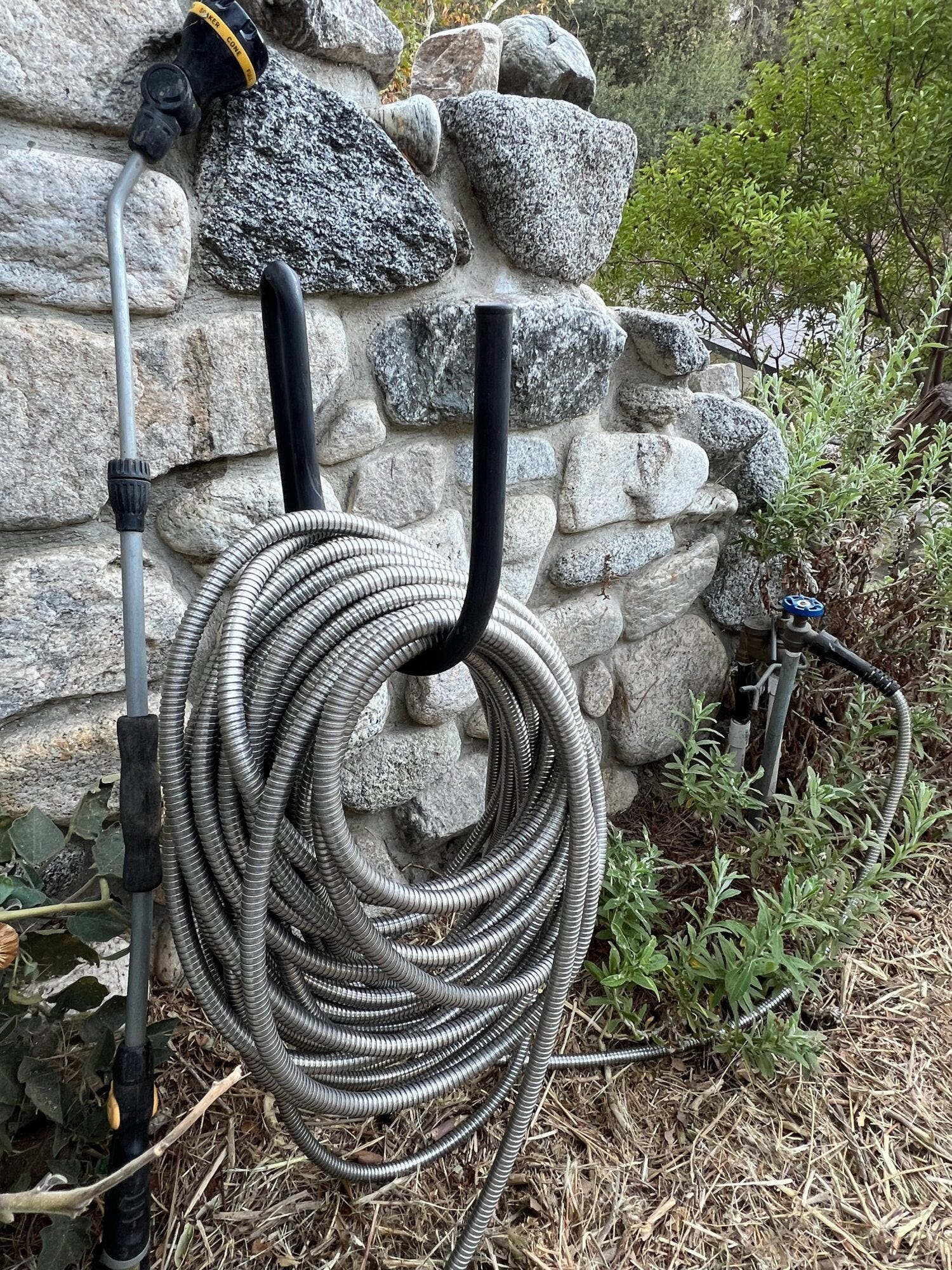
While cloth and steel hoses aren’t as bulky as vinyl and don’t take up as much room, it’s still a drag (and a trip hazard) to have a bunch of tangled hoses on the ground constantly getting in the way. The best way to avoid this unsafe and unsightly nuisance is to install a strategically placed hook or hose caddy. If you’re a lazy slob like me, you’ll find that being able to more conveniently stow your hoses out of the way will encourage you to roll them up when you’re finished. And, unlike an unwieldy and uncooperative vinyl hose, both cloth and steel hoses coil up effortlessly.
First Bibs
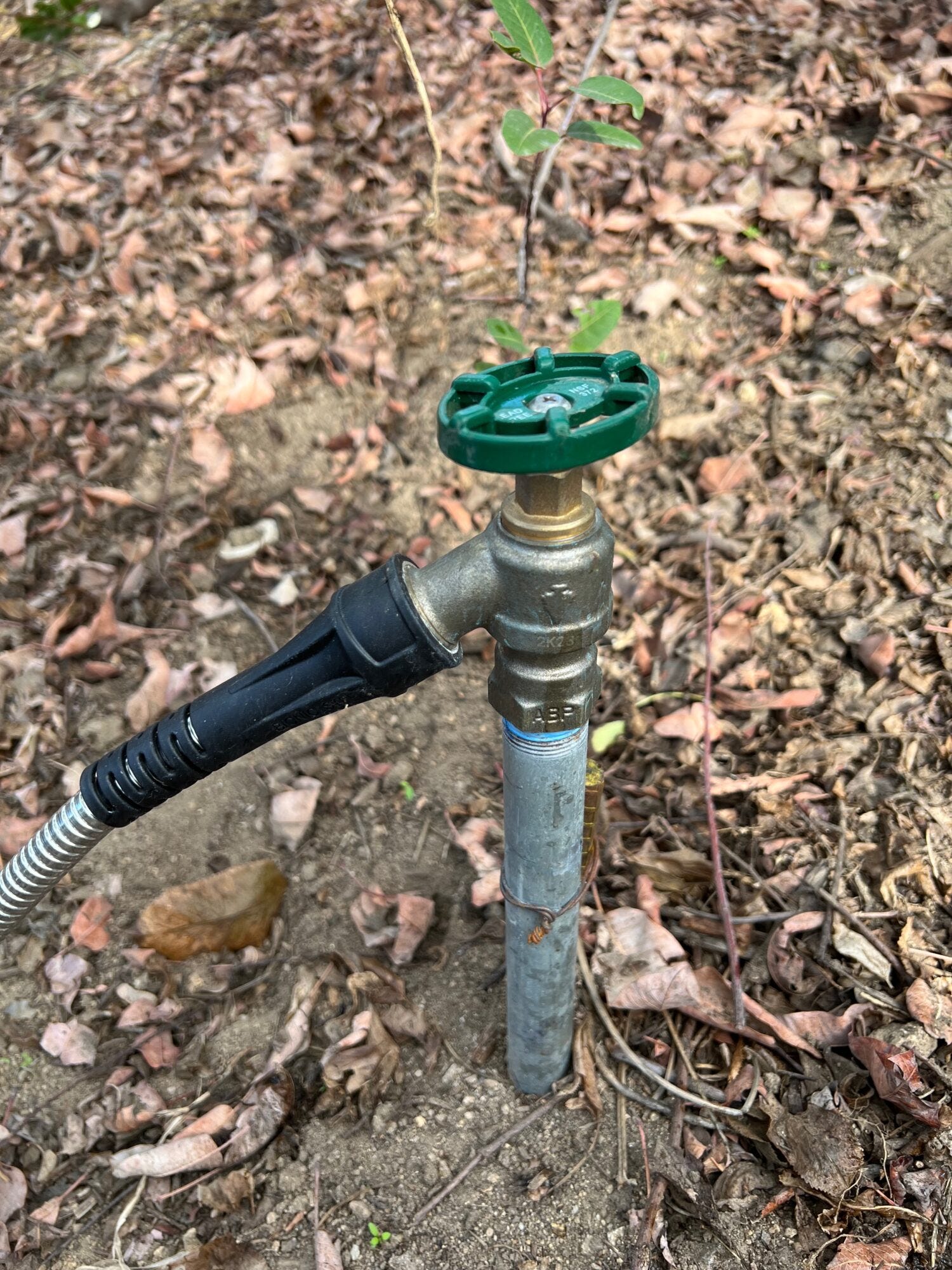
The more hose bibs you have, the easier it will be to get water to where it’s needed in your garden without damaging fragile plants in the process. Whether you call in a professional or make a weekend DIY project of it, adding a few more strategically placed hose bibs will make the job of hand watering so much easier, you’ll wonder why you waited so long.
A Final Caveat
No matter how many of these tips you incorporate into a hand-watering regimen, it’s still going to take a considerable amount of time, especially with newer gardens that require more frequent irrigation. Before you commit yourself then, take a moment to realistically assess how much time you have at your disposal. If early retirement isn’t an option or you’re not sure you’re ready to take the leap, you can always designate a single area in your garden as a provisional “Hand Watering Only” zone and see how it goes.
If you do have the time, however, I hope I have been able to persuade you that hand watering your native garden is a noble calling and well worth the effort.
"You can never have too many bags, shoes or hose bibs." Thanks for teaching me those thingies are called hose bigs. I love to laugh while I'm learning!